 /
/ 





















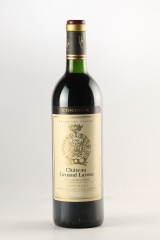

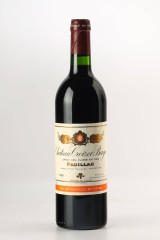


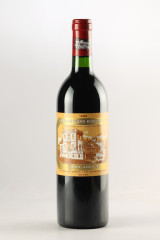


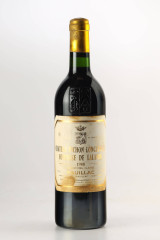
Receive our latest arrivals of 1988 Wine by email!
Sign up and be the first to know about new arrivals.

Would you like to create your own composition? Contact us!
 Contact us

The 1988 vintage suffers from a misleading reputation: sandwiched between the glorious 1989 and 1990, it is too often reduced to a mere transitional vintage. It is, however, a year of patience and precision, where a rainy winter and a difficult flowering did not prevent the finest producers from crafting wines of classic structure and ageing potential that is confirmed today. The true revelation lies in Sauternes: Château d'Yquem 1988, one of the absolute summits of the estate. On the left bank, Château Lafite Rothschild 1988 illustrates the tannic rigour characteristic of this vintage, promising a fine future. To compare 1988 with other great years, consult our Vintage Guide.
Read moreFiltrer
Products (51)
Sign up and be the first to know about new arrivals.
Some GREAT WINES FROM 1988 ...
The 1988 vintage in France long lived in the shadow of the two years that followed it. An abnormally rainy winter, persistent rains through June and an irregular flowering gave grounds to fear a complicated harvest. It was ultimately a drier summer and an early harvest of the Cabernet Sauvignon that saved the year, yielding tannic and acidic wines, built for longevity rather than immediacy. This restrained profile, long underestimated, now reveals itself as the true signature of the vintage: a year of vignerons more than of stars, where the rigour of the work counts for more than the mere whim of the climate.
In Bordeaux, the winter of 1987–1988 dragged on with persistent damp, and rains continued through June, delaying and disrupting the flowering. Summer brought drier conditions, but it was the harvest date that decided everything: many Médoc producers brought in the Cabernet Sauvignon early, before the late September rains, yielding wines with high acidity and tannins, sometimes austere in youth but destined for slow ageing. The right bank and the Graves, benefiting from a better-placed Merlot, delivered softer, more approachable wines. The true achievement of the vintage lies in Sauternes and Barsac: late-season conditions produced exceptional botrytis and a concentration of rare intensity, making 1988 one of the very finest vintages of the decade for sweet wines.
In Pauillac and Saint-Julien, several estates rank 1988 among their quietly successful years: Château Latour 1988 retains the tannic density characteristic of the Médoc in taut years, while Château Ducru-Beaucaillou 1988 displays in Saint-Julien a classic structure of tobacco and blackcurrant, revealing the style of the vintage. In Saint-Estèphe, Château Cos d'Estournel 1988 spices its character with exotic notes and dark fruits, while Château Lynch Bages 1988 confirms the estate's consistency in a demanding year. Château Haut-Brion, La Mission Haut-Brion and Domaine de Chevalier produce, in Pessac-Léognan, fine and distinguished wines that rank among the most honest of the vintage.
In Burgundy, the flowering of May and June 1988 took place in cold and wet conditions, raising fears of a difficult harvest. A warm and generously sunny early September ultimately saved the year, enabling rapid ripening on reduced volumes. The reds from the Côte de Nuits, better exposed, clearly outperformed those from the Côte de Beaune: these are austere wines in their youth, with a classic structure, which have rounded out over time to reveal today black fruits and undergrowth. The whites, rarer in this vintage, rely on tension and mineral precision rather than opulence.
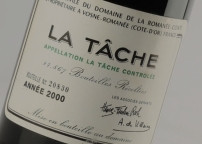
The Domaine de la Romanée-Conti 1988 stands as one of the absolute benchmarks of the Côte de Nuits in this demanding year, alongside the Armand Rousseau estate, whose Gevrey-Chambertin wines reflect with great finesse the rigour of the vintage. Henri Jayer, Georges Roumier and Robert Groffier are also among the vignerons who best navigated this tightly yielding harvest, while Michel Lafarge and the Marquis d'Angerville confirm, in Volnay, the capacity of 1988 to produce wines built for ageing on the finest terroirs.
In the northern Rhône, 1988 benefited from ripe Syrah and well-preserved acidity, far from the overripeness that would sometimes characterise the two following vintages. The Côte-Rôtie wines of the year display a dense and spiced character, built for long ageing — a profile now being rediscovered by enthusiasts who were long distracted by the reputation of 1989 and 1990. In the south, the year also proved a success, on a more structured register: full and tannic wines, of classic style, but conceived for shorter ageing than those of the north.
The Guigal estate once again dominates the northern Rhône in this vintage, with Côte-Rôtie wines of remarkable depth and ageing potential. In the south, Château Rayas 1988 illustrates the success of Châteauneuf-du-Pape in this year, with a full and tannic character, faithful to the typicity of the estate.
Champagne 1988 experienced a late harvest and measured ripeness, with a preserved acidity that long cast doubt on its potential in the face of the opulence of the 1989 that followed. Time has nonetheless vindicated this vintage: structured, concentrated, carried by a sufficient acidity for long ageing, it delivers today Champagnes of slight austerity, which demand more patience than their neighbours but amply reward the wait.
The Krug house produced a 1988 Vintage of great stature, a hallmark of the years built for ageing, while Dom Pérignon 1988 confirms, on notes of dried fruit and brioche, the cuvée's ability to traverse the decades on a taut rather than opulent balance.
In Alsace, the year 1988 began with a flowering two weeks early, under ideal conditions, followed by a hot and generously sunny summer. The harvest started early, from 21 September for the crémant and then early October for the noble grape varieties, on a ripeness already well established. Some greyer weather moved in during the harvest without harming quality: the acidity, predominantly tartaric, promises good ageing potential, and a fine proportion of late harvest wines and selections of noble grapes was gathered through to December.
The Zind-Humbrecht estate illustrates, in this vintage, the precision and tension that characterise the finest wines of the region, within an Alsace where the balance and structure of 1988 were long overshadowed by the 1989 and 1990 vintages, before revealing an unexpected grace with time.
The 1988 wine speaks to the curious enthusiast who wants to understand how a great vintage can emerge in the shadow of two others. Sumptuous Sauternes, tannic Bordeaux built to last, selective Burgundy, a remarkable northern Rhône, Champagne of rare rigour: each region demonstrates in its own way that patience ultimately pays off. To place 1988 among the other great years and refine your choice, consult our SoDivin Vintage Guide


