/















Receive our latest arrivals of 1952 Wine by email!
Sign up and be the first to know about new arrivals.

Would you like to create your own composition? Contact us!
 Contact us

In 1952, a hot, dry summer gave way to cold and rain in the first days of September. The Right Bank appellations of Pomerol and Saint-Émilion harvested their Merlot before the downpours and produced the year’s finest bottles, alongside excellent Graves wines; the Médoc, picked at lower ripeness, yielded firm, tannic reds. Château Pétrus leads an outstanding Pomerol, while Château Cheval Blanc flies the flag for Saint-Émilion. It was also a great declared vintage in Champagne, built on acidity, and a very successful year in Burgundy, where the whites shine as brightly as the firm Côte de Nuits reds. Buyers should therefore prioritise the Right Bank, Graves and the great whites. To see where 1952 stands among the century’s great years, consult our Vintage Guide.
Read moreFiltrer
Products (9)
Sign up and be the first to know about new arrivals.
A few OUTSTANDING WINES from 1952...
Because the weather at harvest reversed the usual hierarchy. After a hot, dry summer, rain and cold arrived in early September. The earlier-ripening Merlot of Pomerol and Saint-Émilion was harvested before most of the rain: these wines are ripe, balanced and more appealing than those of the Médoc, where the later-ripening Cabernet Sauvignon was picked less ripe. Graves, with its high proportion of Merlot, also did very well. Château La Mission Haut-Brion illustrates the quality achieved in Graves in a demanding year. For 1952, buyers should therefore look first to the Right Bank and Graves.
Yes. A bottle from 1952 is now in its eighth decade and carries a real emotional significance, far beyond that of a recent wine, when marking a birth year or wedding anniversary. The finest Right Bank terroirs, great white Burgundies and vintage Champagnes from that year have the staying power for the occasion. Bottles remain rare, making each one special. We always prioritise impeccable fill levels and provenance, to help ensure a tasting worthy of the moment.
Yes, if it comes from one of the best terroirs and has been carefully stored. The vintage’s tannic structure gave its great wines genuine longevity: more than seventy years on, the finest wines of Pomerol, Saint-Émilion and Graves remain suitable for drinking, with tertiary aromas of cedar, truffle and dried fruit. As with any very old vintage, the fill level and provenance matter more than the name, and variation between bottles is normal. The best examples of Bordeaux Classified Growths, kept in impeccable condition, are the safest choices.
Geography is the key to understanding the 1952 vintage. A fine summer raised hopes of a great year everywhere, before a cold, rainy September divided the regions according to when they harvested. Where the grapes were already in, the wines succeeded; where they still needed to ripen, the wines became hard-edged. The result is an age-worthy vintage, demanding on Bordeaux’s Left Bank but outstanding on the Right Bank, in Graves, Burgundy and Champagne. Today, the best bottles offer wines of mellow depth.
In Bordeaux, 1952 was a quality vintage disrupted by rain at harvest. The early-ripening Merlot of the Right Bank was picked before the heaviest downpours, while the later-ripening Cabernet Sauvignon of the Médoc was often harvested before it had fully ripened. The Left Bank reds emerged firm, austere and very tannic, in a structured style reminiscent of 1975. Pomerol, Saint-Émilion and the Merlot-rich Graves are the year’s quality heartland.
In Pomerol, Vieux Château Certan is regularly cited as the wine of the vintage, alongside Château Lafleur and other leading names of the appellation. Saint-Émilion excels on its Cabernet Franc terroirs, led by Cheval Blanc. On the Left Bank, success was more selective: in Saint-Estèphe, Château Montrose is one of the few Médoc estates to have made a wine for long ageing in this difficult year.
Ageing potential: the best Pomerol, Saint-Émilion and Graves wines are at their peak; Médoc is for those who appreciate a firm style. Check the fill level before buying and decant with care.
Burgundy fared much better in 1952 than Bordeaux. After a hot, dry June and July, welcome rain in mid-August helped the grapes continue ripening, resulting in a healthy but small harvest. The reds emerged firm, well-built and suited to long development, with more structure than the decade’s average. The silky, distinguished whites are among the year’s highlights.
The well-drained slopes of the Côte de Nuits produced the most accomplished reds and those best suited to ageing, from Gevrey-Chambertin to Vosne-Romanée. Among the whites, the great terroirs of Corton-Charlemagne and Montrachet produced wines of remarkable longevity. In a firm year like this, the skill of the estate and the rigour of its élevage make all the difference, and the best bottles retain surprising freshness today.
Ageing potential: choose only reputable Côte de Nuits producers and fine whites; open for the finesse of an old bottle rather than for power.
1952 is one of Champagne’s great post-war years, declared by the leading houses. The cool growing season produced base wines with high acidity, a key factor in their longevity, with particularly successful Pinot Noir from the Montagne de Reims. Together with 1953, it formed a pair of declared vintages, a sequence the region had not seen since the turn of the century.
It is also a landmark year in wine history: 1952 was the inaugural vintage of Bollinger R.D. The year’s vintage cuvées, such as Dom Pérignon, are now collectors’ bottles: their bubbles have softened but remain present, alongside mature notes of candied citrus, dried fruit and toast. Only bottles with impeccably documented provenance deserve to be opened.
Ageing potential: collectors’ bottles above all; taste only impeccably stored bottles, served cool but not ice-cold.
In the Northern Rhône, 1952 was a solid, well-structured year, though it did not reach the decade’s heights of 1947, 1949 or 1959. The granite slopes of Hermitage and Côte-Rôtie produced full-bodied, spicy Syrah built for ageing; the best bottles retain evolved notes of black fruit, leather and spice.
The historic négociant houses of Tain-l’Hermitage and Ampuis, which already had genuine expertise in ageing wines, remain the most reliable guides for this year: their bottles have the best-documented provenance. The rare bottles still in circulation are for enthusiasts of very old Syrah.
Ageing potential: choose only bottles with an impeccable history; lengthy decanting is recommended for Northern Rhône reds.
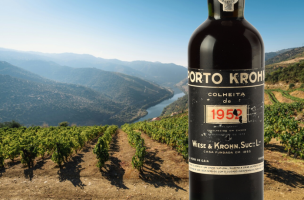
The year owes much of its renown to Graham’s 1952 colheita, bottled for the Queen’s Diamond Jubilee and praised as a port of rare aromatic intensity. That is one of this vintage’s strengths: colheita is ready to drink as soon as it is opened, with no decanting or waiting, yet retains the patina of a very old wine. An ideal introduction for anyone who wants to taste 1952 without taking a chance on a fragile red.
Ageing potential: ready to drink, with no need to wait or decant; keeps for several years after opening. Serve slightly chilled (12–16 °C).
Choosing a 1952 wine means seeking out an age-worthy vintage in which Bordeaux’s Right Bank, Graves, Burgundy and Champagne came to the fore, while colheita port offers a reliable, appealing introduction. It is also an opportunity to give a rare and meaningful birth-year wine. Every bottle is assessed and checked for fill level, label condition and provenance before dispatch. To compare vintages and refine your choice, consult the SoDivin Vintage Guide. Same-day dispatch for orders placed before 2 pm, with careful, secure packaging.