 /
/ 



























Receive our latest arrivals of Rhône Region by email!
Sign up and be the first to know about new arrivals.

Would you like to create your own composition? Contact us!
 Contact us


The Rhône Valley stretches its vineyard over more than 200 kilometres, from Vienne to Avignon, in two contrasting ensembles. In the north, on granite hillsides carved into terraces, syrah produces raceful reds while viognier, marsanne and roussanne carry the whites. In the south, under the Mediterranean climate swept by the mistral, grenache leads generous blends. Côte-Rôtie, Hermitage, Cornas, Châteauneuf-du-Pape and Gigondas embody the summits of the region.
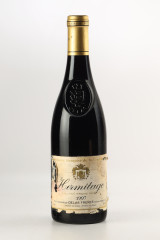
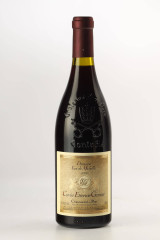
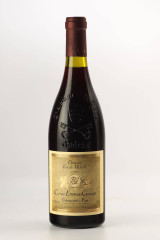
This diversity is reflected in its great age-worthy wines: the Chapoutier La Sizeranne 1989 reveals the depth of Hermitage, while the Guigal Brune et Blonde 1995 expresses the smoky elegance of Côte-Rôtie and the Chapoutier Barbe Rac 1994 the sun-drenched power of grenache. The great years produce wines of remarkable longevity, from the 2010 vintage to the 1990 wines.
Read moreFiltrer
Products (220)
Sign up and be the first to know about new arrivals.
Our selection of GREAT RHÔNE WINES
Rhône Valley wines stand out for their great diversity of styles and terroirs. From north to south, the region offers powerful and structured red wines, elegant and aromatic whites, as well as sun-drenched and generous wines. The climate, varied soils and strong identity of the grape varieties give Rhône wines a unique richness and personality.
The Rhône Valley is home to numerous renowned appellations such as Hermitage, Côte-Rôtie, Châteauneuf-du-Pape, Cornas and Saint-Joseph. These appellations produce great wines recognised for their complexity, aromatic intensity and remarkable ageing potential. Among the essential references are Domaine Jean-Louis Chave, E. Guigal, Domaine Auguste Clape and Château Rayas.
The Rhône Valley has produced several benchmark vintages, recognised for their balance, concentration and excellent ageing potential. Among the most renowned are notably 1990, 1998, 2005, 2009, 2010, 2015 and 2016, which produced deep, structured wines of great aromatic complexity. Some older vintages, such as 1989 or 1978, also continue to offer superb tastings when they have been kept in optimal conditions. These great years allow Rhône wines to evolve magnificently over time, revealing all the richness of their terroir.
The Rhône Valley is among the oldest vineyards in France: vines have been attested there since Antiquity, on the future sites of Hermitage and Côte-Rôtie, cultivated along a river that already served as a trade route. The decisive turning point came in the 14th century, when the papacy settled in Avignon: the popes developed the neighbouring vineyard, whose memory is preserved in the name Châteauneuf-du-Pape. After the phylloxera crisis that devastated the hillsides at the end of the 19th century, the region rebuilt itself and played a pioneering role in the birth of the appellations d'origine contrôlée: Châteauneuf-du-Pape became in 1936 one of the very first French AOCs, closely followed by Côtes-du-Rhône. This dual identity — southern and northern — forges the character of a region that is both popular and prestigious.
The vineyard divides into two blocks separated by roughly fifty kilometres of almost vine-free land. In the north, from Vienne to the outskirts of Valence, the vines cling to steep granite hillsides, often terraced in stone to retain the soil: the climate here is cooler, with a continental tendency, and slow ripening yields finely chiselled wines. In the south, from Montélimar down to Avignon, the landscape opens up to a Mediterranean climate — warm and sunny, punctuated by the mistral, that northerly wind which dries the air and protects the grapes from disease. Here one finds the famous galets roulés, those large stones rounded by the Rhône that store the warmth of the day and release it at night, helping the grenache grapes reach full ripeness. To continue exploring the estates that shape these terroirs, an article dedicated to the great wines of the Rhône Valley revisits this heritage.
The wines of the region are organised in a simple pyramid. At the base, the regional Côtes-du-Rhône appellation accounts for the bulk of volumes; above come the Côtes-du-Rhône Villages, sometimes followed by the name of a commune, then, at the summit, the crus — those delimited terroirs that carry their name alone. The north lines up hillside crus of great precision: Côte-Rôtie, the only red appellation in the area to blend a little viognier with syrah, Condrieu devoted solely to white viognier, the mythical hill of Hermitage and its more accessible neighbour Crozes-Hermitage, Saint-Joseph running along the river, and Cornas, all syrah and no white. The south is led by Châteauneuf-du-Pape, where the wine can traditionally blend thirteen grape varieties around grenache, and by Gigondas, a sun-drenched cru at the foot of the Dentelles de Montmirail. The region has no château classification like the Médoc: it is the hierarchy of appellations, rather than a fixed ranking, that maps out its great wines.
Two families of grape varieties define the region. In the north, syrah reigns over the reds, clothing them in dark fruit, violet, pepper and a very distinctive smoky note; the whites, rarer, come from viognier — floral and full — and the marsanne-roussanne duo. In the south, grenache sets the tone, supported by syrah, mourvèdre and cinsault: these blends produce warm reds with aromas of ripe fruit, garrigue and spice, while the southern whites seduce with their roundness. The regional palette does not stop there, as the Rhône also includes gastronomic rosés and sparkling whites in its southern part and on its margins. This variety makes Rhône wines versatile companions at the table, from a simple slow-cooked dish to game and aged cheeses for the most structured cuvées.
Ageing potential varies greatly depending on style. The great northern reds — Hermitage, Côte-Rôtie, Cornas — readily span several decades, gaining aromas of leather, truffle and undergrowth over time. In the south, the finest Châteauneuf-du-Pape and Gigondas also evolve over fifteen to twenty years in great vintages, while simpler Côtes-du-Rhône are best enjoyed in their youthful fruitiness. To navigate between legendary years and more accessible recent vintages, a vintage guide allows you to compare their potential. Great years such as the 2005 vintage or 1978 wines remain benchmarks, alongside the 2015 vintage, already highly sought-after. Long recognised as one of the great wine regions of the world, the Rhône Valley owes this reputation to the consistency of its most acclaimed terroirs.
A few estates embody the pinnacle of the region. At Hermitage, Domaine Jean-Louis Chave perpetuates an art of blending individual lieu-dits passed down over several centuries. At Châteauneuf-du-Pape, Château Rayas produces a grenache of rare finesse, running counter to powerful wines, while Château de Beaucastel faithfully cultivates all the grape varieties of the appellation. At Cornas, Domaine Clape remains the benchmark for a deep, uncompromising syrah. Carried by these winemakers and many others, the wines of the Rhône offer a vivid reading of their terroirs, from the smoky grain of the northern hillsides to the warmth of the southern galets.
Ordering a wine from the Rhône region at SoDivin means choosing an excellence service dedicated to fine wine lovers. Enjoy same-day dispatch for any order placed before 2 pm, with delivery as soon as the next day. Every bottle receives special care, and our packaging ensures optimal protection during transit.
SoDivin also offers you the option of adding a personalised message as well as wooden gift boxes, ideal for gifting on the occasion of a birthday or other celebration. Furthermore, you have the choice of dispatch date for delivery tailored to your needs. Our wines are kept in optimal conditions and you can view high-definition photographs of each bottle online before purchasing, for complete transparency.


