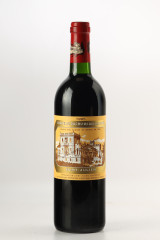
Château Ducru Beaucaillou

Château Ducru Beaucaillou

Create an alert

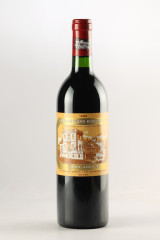
Château Ducru-Beaucaillou is a 75-hectare wine estate located in Saint-Julien-Beychevelle in Gironde. Under the Saint-Julien appellation, it is classified as a Second Growth (Deuxième Cru Classé) in the official 1855 classification. The Ducru-Beaucaillou terroir owes its name to the large Günz gravel stones with a thickness of 6 to 8 meters. The grape variety composition is 70% Cabernet Sauvignon and 30% Merlot, with a deliberate choice not to use Petit Verdot or Cabernet Franc. The vines have an average age of 35 years and are planted in very high density (10,000 vines/ha). The Château also produces a second wine called 'La Croix Ducru-Beaucaillou' and a third wine named 'Le Petit Ducru' de Ducru Beaucaillou.

For a tasting, we recommend the Ducru-Beaucaillou 1945, as well as the 1982 and 1989 vintages. We also suggest the Château Ducru-Beaucaillou 1970 which is wonderful and the Ducru-Beaucaillou 1975. Finally, the Ducru-Beaucaillou 1996 and 1998 are exceptional.

  Read more
Read more
Create an alert

Products (14)

Filter

Receive our latest arrivals of Château Ducru Beaucaillou by email!

Sign up and be the first to know about new arrivals.

The first traces of the estate date back to the 13th century. The château was owned by the Bergeron family for several centuries until 1720. In 1795, the château came under the control of the Ducru family, after which the estate took its name. Bertrand Ducru then undertook to profoundly modify the château (with the help of architect Paul Abadie) and the wine-making facilities (new cellars). These efforts were crowned with the attribution of second growth status in the 1855 classification.

In 1866, the château was sold to the family of Nathaniel Johnston (1836-1914), a Bordeaux wine merchant and faience maker, mayor and deputy of Saint-Julien. The financial crisis of 1929 forced Nathaniel Johnston to sell the estate to the Desbarats family, who after only twelve years had to cede it to the Borie family, who still own the château today. 

Read more