/













Receive our latest arrivals of Clos Des Fées by email!
Sign up and be the first to know about new arrivals.

Would you like to create your own composition? Contact us!
 Contact us


Founded in 1997 in Vingrau by Hervé Bizeul, a former Best Young Sommelier of France turned winemaker, the Domaine du Clos des Fées has risen in a single generation to the status of a benchmark estate in Roussillon. Its thirty hectares of old vines, spread across around a hundred plots over seven terroirs in the Pyrénées-Orientales, yield Côtes du Roussillon and IGP Côtes Catalanes wines of rare density and freshness, driven by grenache, syrah, carignan and mourvèdre.
Among the great vintages, the 2016 vintage ranks among the estate's recent peaks and the 2011 confirms its consistency at the very highest level, while the 2020 wine illustrates the brilliance of the most recent harvests. Its micro-cuvée La Petite Sibérie, born from a plot of old grenache vines, remains one of the most sought-after wines in Languedoc-Roussillon.
Read moreFiltrer
Products (15)
Sign up and be the first to know about new arrivals.
Our selection of the Great Vintages from Clos des Fées
Founded by Hervé Bizeul, a former sommelier turned winemaker, the estate cultivates a mosaic of old vines spread across seven terroirs. This pursuit of precision and its independence from trends have made it one of the estates that have restored Roussillon's place among France's great wine regions.
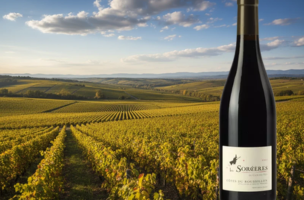
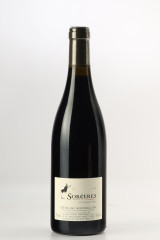
Les Sorcières, in red or white, offers the most accessible way to discover the estate's style. To move up the range, the Vieilles Vignes and Le Clos des Fées cuvées express older vines; La Petite Sibérie, meanwhile, remains the cult micro-cuvée reserved for the finest occasions.
The entry-level cuvées are best enjoyed young or after a few years, while the most ambitious wines, such as Le Clos des Fées and La Petite Sibérie, evolve over ten to twenty years. They are best served decanted, at around 16–17 °C.
The story of Clos des Fées is first and foremost that of an extraordinary journey. Born in Perpignan, Hervé Bizeul was crowned Best Young Sommelier in France at the age of twenty-one, before running a wine bar in Paris, then becoming a wine journalist and writer. It was in the course of his travels that he discovered, in the late 1990s, the limestone cirque of Vingrau, a village in the Pyrénées-Orientales surrounded by garrigue and swept by the tramontane wind, where very old vines seem never to have been young.
In 1997, he settled with his wife Claudine on barely two hectares, with no cellar or equipment. His first wine, in 1998, was vinified at a friend's premises, in artisanal conditions, and yet was remarked upon from the moment it was released. The ascent was rapid: within a few vintages, the estate expanded, its wines were exported worldwide, and Hervé Bizeul became one of the names that restored Roussillon's credibility among lovers of great wine.
The singularity of Clos des Fées lies first and foremost in the fragmentation of its vineyard. Rather than a single block, the estate brings together around thirty hectares scattered across some one hundred plots, over seven sectors of the Pyrénées-Orientales: Vingrau, Tautavel, Maury, Calce, Lesquerde, Opoul and Espira-de-l'Agly. Each plot brings its own signature, and this diversity is, according to the winemaker himself, one of the keys to the quality of his wines.
The soils range from the clay-limestone of the Vingrau cirque to the schists of Maury, taking in pebble terraces, windswept limestone plateaux and some more granitic soils — a geological variety found, it is said, only in Alsace or Madagascar. The Mediterranean climate, with its warm days and cool nights, ensures slow ripening: the grapes mature while retaining the acidity that gives the wines their freshness, their tension and their mineral profile.
To get the best out of this mosaic, Hervé Bizeul sums up his approach with "three Vs": Vieux, Village, Vingrau. The idea is to work only with old vines — averaging fifty years of age, some over a hundred — from specific villages around his base. At this age, the vines produce little and naturally concentrate their grapes, which is the very foundation of the estate's old-vine cuvées.
Vineyard management follows a reasoned approach: ploughing, synthetic treatments reduced to the bare minimum, and preservation of the garrigue, olive trees and woodlands surrounding the vines to encourage biodiversity. Harvests are carried out entirely by hand. In the cellar, winemaking aims to preserve the expression of each terroir through gentle extraction, with the proportion of new oak progressively reduced over successive vintages to allow more room for fruit and minerality.
The estate's reds are assembled primarily from grenache, syrah, carignan and mourvèdre. They are recognisable by their aromas of ripe black fruits, liquorice, gentle spices and garrigue, lifted depending on the vintage by notes of cocoa or smoke, underpinned by silky tannins and a fresh finish. The whites, built around grenache blanc, play on the brightness of fruit and saline tension. At the table, these wines pair as well with grilled and roasted meats, lamb and game as they do with aged cheeses.
In terms of ageing, the entry-level cuvées are best enjoyed in their youth, while the most ambitious wines evolve over ten to twenty years in the cellar. International critical recognition has accompanied the estate since its earliest days, regularly saluting the consistency of its wines — a credibility built over time rather than on a passing trend.
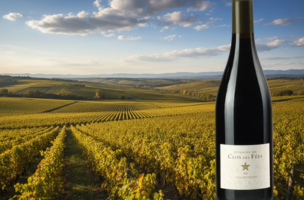
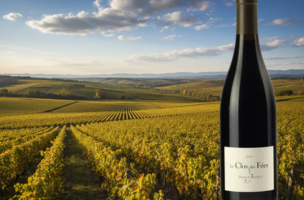
The range forms a genuine ladder of expression. Les Sorcières, in both red and white, represents the estate's approachable and immediately enjoyable entry point. The Vieilles Vignes and Le Clos des Fées cuvées — the latter from the oldest vines, between seventy and one hundred years old — form the heart of the range, while single-parcel cuvées such as Un Faune avec son Fifre or De battre mon cœur s'est arrêté push the logic of terroir even further.
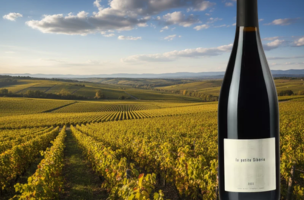
At the very top reigns La Petite Sibérie. This micro-cuvée came about almost by accident in 2001: with no vat available at the end of harvest, Hervé Bizeul vinified in makeshift containers a small plot of old grenache vines, planted on a soil very rich in iron and lashed by an icy wind for nearly two hundred days a year — hence its name. The wine, with its unexpected texture and length, has established itself as one of the most sought-after in Roussillon.
In the Languedoc-Roussillon vineyard, Clos des Fées occupies a singular place: that of the estate which, through its ambition and visibility, helped to change the perception of an entire region long associated with négociant wines. In Calce, it shares certain terroirs with Domaine Gauby, another leading figure of contemporary Roussillon. More broadly, it is in dialogue with the great names of the neighbouring Languedoc, from Domaine de Peyre Rose to Domaine de la Grange des Pères, which have also elevated the South to the highest level. Together, these estates tell the story of the qualitative renaissance of the great French viticultural South, of which Clos des Fées remains one of the standard-bearers.