 /
/ 












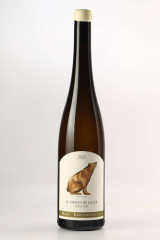


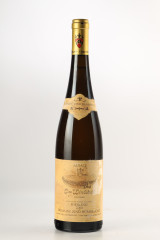
Receive our latest arrivals of Alsace Region by email!
Sign up and be the first to know about new arrivals.

Would you like to create your own composition? Contact us!
 Contact us


The Alsace vineyard stretches between the Vosges and the Rhine plain, forming one of France's most emblematic wine regions. It produces mainly white wines under the Alsace and Alsace Grand Cru appellations, as well as Crémant d'Alsace, a sparkling wine recognised for its finesse. Alsace is the only French region to cultivate extensively Riesling and Gewurztraminer, noble grape varieties with intense aromas and great ageing potential. Prestigious estates such as Marcel Deiss and Dirler-Cadé illustrate the excellence of this region, where terroir and aromatic purity are at the heart of each wine.
Read moreFiltrer
Products (42)
Sign up and be the first to know about new arrivals.
The Alsace vineyard stretches for approximately 120 kilometres between Strasbourg and Mulhouse, on the eastern slopes of the Vosges, facing the Rhine plain. This unique location offers a dry and sunny microclimate, ideal for cultivating the noble grape varieties that make the reputation of Alsace wines.
Alsace produces mainly dry or sweet white wines, renowned for their aromatic purity and freshness. There are also Crémants d'Alsace, elegant sparkling wines, as well as a few rosés and reds made mainly from Pinot Noir. The main appellations are Alsace AOC, Alsace Grand Cru and Crémant d'Alsace.
Alsace wines enjoy an international reputation for their balance, precision and ageing potential. They are regularly praised by renowned critics such as La Revue du Vin de France, James Suckling and Wine Advocate. Estates such as Marcel Deiss and Dirler-Cadé are among the greatest French producers.
Located between the Vosges and the Rhine plain, the Alsace wine region stretches for nearly 120 kilometres from north to south, forming a ribbon of east-facing hillsides. Thanks to its semi-continental, dry and sunny climate, and a mosaic of complex soils, Alsace offers ideal conditions for producing white wines of rare aromatic precision.
Alsace wines are distinguished by their purity, freshness and faithful expression of the terroir. They are produced under several prestigious appellations: Alsace AOC, Alsace Grand Cru and Crémant d'Alsace, the latter dedicated to sparkling wines renowned for their finesse and elegance.
The history of the Alsace vineyard dates back to Roman times, but it was in the Middle Ages that it experienced real growth, particularly thanks to the monasteries which developed viticulture on the hillsides of the Vosges. From the 16th to the 18th century, Alsace wines were among the most sought-after in Europe, exported as far as Scandinavia and England.
In the 20th century, the region experienced a succession of political upheavals before obtaining in 1962 the Appellation d'Origine Contrôlée Alsace, followed in 1975 by the AOC Alsace Grand Cru, which officially recognises the exceptional quality of certain terroirs. Today, Alsace is a benchmark wine region, where tradition combines with innovation to produce wines for ageing and gastronomic wines.
Alsace is the only French wine region to produce significant quantities of Riesling and Gewurztraminer, two powerfully aromatic grape varieties typical of its identity. Alsace Riesling is distinguished by its purity and mineral tension, whilst Gewurztraminer seduces with its notes of exotic fruits, spices and flowers.
There is also Pinot Gris, rich and structured, Muscat, lively and aromatic, and Sylvaner, light and refreshing. These grape varieties find in the varied soils of sandstone, limestone, marl or schist a unique expression, reflecting Alsace's geological diversity.
The region has 51 Grands Crus, spread over approximately 1,700 hectares, which illustrate the complexity and richness of the Alsace terroir. Each has its own characteristics in terms of soil, exposure and microclimate, giving rise to wines with a distinctive character.
Prestigious sites such as Altenberg de Bergheim, Schoenenbourg, Kitterlé, Rangen de Thann or Mambourg are among the most renowned. These terroirs produce wines for long ageing, sought after for their depth, balance and ability to evolve magnificently over time.
Several renowned houses contribute to the worldwide reputation of Alsace wines. Domaine Marcel Deiss, in Bergheim, embodies an approach centred on field blending and biodynamics, favouring the expression of terroir over that of grape variety. Domaine Dirler-Cadé, in Bergholtz, a pioneer of biodynamic viticulture, is recognised for the purity and precision of its Grands Crus.
These estates regularly feature in the rankings of La Revue du Vin de France, which praises their consistency and quality standards. They illustrate the richness of Alsace's heritage and the winegrowers' commitment to sustainable viticulture that respects nature.
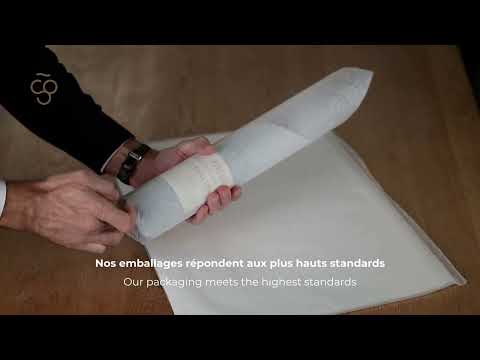
To help you choose your bottle of wine, you can find the expert ratings (La Revue du Vin de France, Robert Parker, Jancis Robinson, Wine Spectator) available under each product. All our bottles are in stock and dispatched the same day for next day delivery. You can also add a wooden case and a personalised message to your order.
Our entire team is also at your disposal to advise you. Please do not hesitate to contact us.


