 /
/ 

















Receive our latest arrivals of Region Languedoc-Roussillon by email!
Sign up and be the first to know about new arrivals.

Would you like to create your own composition? Contact us!
 Contact us

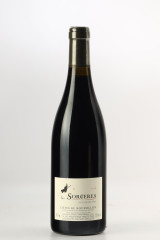
Stretching from Nîmes to the Catalan border, the Languedoc-Roussillon vineyard unfolds across the Gard, Hérault, Aude and Pyrénées-Orientales, weaving a mosaic of terroirs between garrigue, schist, limestone and the Mediterranean shore. Its crus — Pic Saint-Loup, Terrasses du Larzac, Faugères, Coteaux du Languedoc — produce full-bodied reds from syrah, grenache and mourvèdre, whites from picpoul and the sparkling wines of Limoux. Altitude and day-to-night temperature swings yield fresh, age-worthy reds, as exemplified by the cuvée Domaine du Clos des Fées Les Sorcières 2025, the Mas Bruguière La Grenadière 2023 or the singular Roc d'Anglade 2023. The great terroirs reveal their depth with time: the 2020 vintage for its freshness, the 2015 for its sun-drenched density, the 2010 wine for its accomplished maturity.
Read moreFiltrer
Products (136)
Sign up and be the first to know about new arrivals.
Languedoc-Roussillon is among the oldest vineyards in France: the vine was established here in Antiquity, around Narbonne, under the impetus of the Greeks and then the Romans. Its history has seen famous upheavals, including an imperial edict that, at the end of the 1st century, ordered part of the vines to be uprooted before a subsequent emperor once again permitted planting. The Middle Ages, driven by abbeys, firmly anchored wine culture in the region. In the 19th century, the arrival of the railway opened vast markets and pushed the region towards mass production, from which it would take a century to extricate itself — the winegrowers' revolt of 1907 remaining its enduring symbol. The real turning point came at the end of the 1980s: a generation of winemakers abandoned volume in favour of a careful reading of terroirs. It is this shift, from yield to identity, that underpins the current face of Languedoc-Roussillon.
The vineyard stretches in an arc along the Mediterranean, from the Camargue and Nîmes in the east to the gateway of Catalonia in the west, across four départements: the Gard, the Hérault, the Aude and the Pyrénées-Orientales. The climate is Mediterranean — hot, dry summers and mild winters — swept by winds such as the tramontane, which keep the vines healthy and concentrate the grapes. This shared setting conceals great diversity of soils, and it is this diversity that makes the region so rich. Black schist yields deep, smoky wines; limestone hillsides bring freshness and finesse; terraces of pebbles and gravel store the day's heat. The higher one climbs towards the hinterland and the foothills of the Cévennes or the Larzac, the cooler the nights become: this temperature differential between day and night preserves aromas and acidity, while near the coast, the sea air and spray lend a recognisable salinity to certain wines.
The organisation of wines reads like a pyramid. At the base, a regional appellation, established in 2007 and common to both Languedoc and Roussillon, encompasses a wide range of styles. Above it, individual crus and denominations stand out, each tied to a specific terroir. Among the pages worth exploring are the Faugères appellation, the historic heartland of schist, Pic Saint-Loup, which became a full appellation in 2017 to the north of Montpellier, the Terrasses du Larzac, recognised in 2014 for their high-altitude reds, and the Coteaux du Languedoc, the cradle of many terroirs. Alongside them shine other reference names, from La Clape, elevated to a communal appellation in 2015 facing Narbonne, to Minervois, Corbières and Saint-Chinian. Unlike Bordeaux, the region does not rely on a historic classification of châteaux: its hierarchy is built on terroir and the gradual recognition of its finest sectors.
The palette of grape varieties is one of the widest in France. In reds and rosés, grenache, syrah, mourvèdre, carignan and cinsault dominate, yielding generous wines with aromas of dark fruits, garrigue and spices. The whites draw on picpoul, lively and iodine-tinged, clairette, bourboulenc, grenache blanc, roussanne and vermentino, for styles ranging from taut and dry to fuller-bodied whites. The region also cultivates two specialities: the sparkling wines of Limoux, driven notably by mauzac, which perpetuate one of France's oldest traditions of bubbles, and muscat as naturally sweet wines, from Frontignan to Saint-Jean-de-Minervois, sweet and fragrant. This diversity makes Languedoc-Roussillon particularly welcoming at the table, from a characterful red such as Mas Cal Demoura Les Combariolles 2023 with grilled meat to a coastal white alongside shellfish.
Not all wines from the region are conceived with the same ageing potential in mind. Lively whites, rosés and fruit-forward cuvées are best enjoyed in their youth, within two to four years. Reds from schist, limestone or high-altitude vineyards, with greater structure, benefit from patience: five to ten years, sometimes more for the finest cuvées, allowing the tannins to mellow and the bouquet to evolve towards leather, undergrowth and candied fruit. To navigate from one vintage to the next, a vintage guide allows you to compare years. Among recent vintages, the 2019 vintage produced concentrated reds, while a 2018 red wine combines body with ageing potential; the 2016 stands out for its aromatic intensity. Today, the great terroirs of Languedoc-Roussillon enjoy international recognition, driven by the consistency of their finest cuvées and the attention of enthusiasts worldwide.
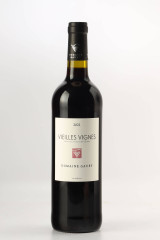
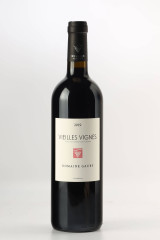
The region's recent renown owes much to its winemakers. In Roussillon, Domaine Gauby Vieilles Vignes 2023 illustrates the depth of old carignan and grenache vines on schist. At the heart of Languedoc, Domaine Alain Chabanon Le Merle aux Alouettes 2020 reflects an exacting approach to terroir, while in Faugères Domaine Bardi d'Alquier La Maison Jaune 2022 highlights the smoky finesse of schist. These estates, and many others around Pic Saint-Loup, the Terrasses du Larzac or La Clape, have elevated Languedoc-Roussillon from a high-volume wine region to one sought after for its great wines, where each terroir tells a different story. To delve further into these references and their ageing potential, our article dedicated to the great wines of Languedoc-Roussillon, our article dedicated to the great wines of Languedoc-Roussillon explores in detail the terroirs, iconic estates and the region's ageing potential.
Our selection of Languedoc-Roussillon wines is built around a simple principle: to offer only estates run by winemakers who have made absolute rigour and terroir their sole compass. No négociant wines, no branded wines — only independent properties, often farmed biodynamically, whose red wines from Languedoc, white wines from Roussillon and great wines of Languedoc-Roussillon represent enduring references.