 /
















Receive our latest arrivals of 1941 Wine by email!
Sign up and be the first to know about new arrivals.

Would you like to create your own composition? Contact us!
 Contact us
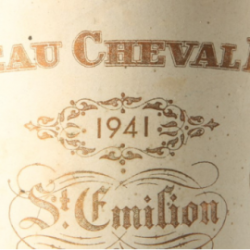
The 1941 vintage is a wartime wine, born under the Occupation in a cold, damp year with very low yields. Bottles are rare and uneven, but time has revealed some fine survivors, now sought as collector’s pieces. The hierarchy is clear: fortified wines, led by Port, are the year’s finest, ahead of a handful of Bordeaux Left Bank grands crus. Quinta do Noval, which declared 1941 as one of its few wartime vintages, and Château Lafite Rothschild, one of Bordeaux’s finest successes that year, are its two most desirable examples. To place 1941 alongside neighbouring vintages, our Vintage Guide helps you compare years and buy with confidence.
Filtrer
Products (1)
Sign up and be the first to know about new arrivals.
No, 1941 was not a consistently great year: marked by war, cold, wet weather and very low yields, it produced rare wines of uneven quality. But a few estates succeeded despite the difficult circumstances, and time has revealed the best. Fortified wines, Port in particular, are the vintage’s high point; on Bordeaux’s left bank, Château Mouton Rothschild is among the year’s finest survivors. In these wines, finesse and freshness matter more than power. For peace of mind when buying, favour perfectly preserved bottles.
Yes, provided you choose carefully. The long-aged ports of 1941 can still be enjoyed and withstand age very well. Among still wines, only the best Bordeaux classified growths kept in good conditions retain an appealing tertiary finesse; they have now reached the end of their ageing potential. Before buying any wine more than eight decades old, examine the fill level, clarity and condition of the label. If you are unsure about an old bottle, decanting it just before serving lets you assess it calmly.
Yes, giving a wine from the recipient’s birth year is a gift rich in emotion and history, especially with a vintage as rare as 1941. As French bottles from that year are scarce and fragile, a well-kept port is often the safest choice both to give and to drink. Always check the fill level, colour and condition of the cork before buying. A bottle with an excellent fill level offers the best chance of enjoyment.
The 1941 vintage falls in the midst of the Second World War. In French vineyards, labour shortages, restrictions and a cold, damp growing season took a heavy toll: small harvests, incomplete ripening and often light wines. The result is a rare, uneven year in which quality owes more to terroir and rigorous selection than to the vintage itself. For buyers, the hierarchy is clear: fortified wines, led by Port, are the finest of 1941, followed by a handful of Left Bank Bordeaux grands crus and some surprisingly fresh Champagne. Burgundy and the Rhône Valley, less prominent that year, are chiefly of interest to collectors.
It is in the Douro Valley that 1941 shows its best side. Port is a fortified wine whose alcohol and structure carry it through the decades without fading: where the year’s still wines aged quickly, 1941 Ports remain lively and dependable to drink. Two styles share the vintage. Vintage Port is bottled young and ages slowly in the bottle; a colheita is a single-vintage Port aged for a long time in cask before bottling, arriving ready to drink with aromas of dried fruit, coffee and caramel. For those discovering old wines, this category offers an accessible, dependable introduction, less vulnerable to the uncertainties of storage than an old Bordeaux.
Quinta do Noval made its mark that year: it was among the few houses to declare a vintage port in 1941 and also produced a colheita from the same year — two single-vintage expressions from a great house in Portugal. Other 1941 colheitas, such as those from Kopke, confirm the year’s success in the Douro. All rank among the most interesting ports for ageing of the wartime decade: pieces of history that remain thoroughly enjoyable wines.
Ageing potential: drink now or keep for decades; check the fill level and the integrity of the cork. A well-kept Port remains the most dependable introduction to pre-war wines.
In Bordeaux, the Left Bank suffered least. Cold, damp conditions hindered Cabernet Sauvignon ripening and reduced yields, leaving overall quality modest. The wines were light to begin with and now have fully softened tannins and tertiary aromas of leather, tobacco and woodland floor. Yet through careful selection, a few great terroirs in the Médoc and Graves produced fine, precise wines that defied the season. These now-rare bottles are the ones sought by collectors of wartime vintages.
Château Latour is one of those survivors: a rarely seen Pauillac, praised for its unexpected elegance in a year marked by adversity. In Pessac-Léognan, Château Haut-Brion retained its hallmark precision, while in Margaux, Château Margaux shows the finesse that the finest terroirs managed to preserve. Together with Lafite Rothschild, these names form the heart of the 1941 Bordeaux selection, best approached as collector’s pieces rather than everyday wines.
Ageing potential: fully mature; the best estates retain a mellow finesse, but checking the fill level and provenance before purchase is essential.
On the Right Bank, 1941 is even harder to find: very few bottles survive from Saint-Émilion and Pomerol, and those that do are museum pieces. The earlier-ripening Merlot sometimes matured better there than the Médoc’s Cabernet, but volumes were tiny. In Sauternes, the year was difficult for sweet wines made with botrytis — noble rot, the fungus that concentrates sugar and richness in the grapes; few estates enjoyed the conditions for a fine harvest. One producer, however, stands apart and alone justifies the interest in the appellation that year.
Among the reds of the Right Bank, Château Cheval Blanc and Pétrus are among the very few bottles from 1941 still sought after by enthusiasts. In Sauternes, Château d'Yquem produced a sweet wine despite the meagre year, a testament to the estate’s consistency: it is the benchmark bottle of the vintage for collectors of great sweet wines with ageing potential.
Ageing potential: collector’s bottles; buy from a dependable source and insist on a fill level at high shoulder or above, especially for sweet wines.
Champagne offers one of the pleasant surprises of 1941. Despite shortages and the Occupation, a few houses made vintage cuvées whose freshness and finesse have stood up remarkably well to time. Produced in very small quantities, these wartime Champagnes are now rarities: the bubbles have often softened, but the finest bottles retain surprising liveliness and complexity for their age. They offer an elegant, less expected introduction to the old wines of 1941.
The house of Pommery is among those whose cuvées from the period best exemplify this delicate style, defined by finesse and freshness rather than power. Opening such a bottle is as much a taste of history as it is a taste of wine.
Ageing potential: open soon; check the fill level and cork condition, and serve cool to preserve what freshness remains.
Buying a wine from 1941 is, above all, acquiring a piece of history: a rare and uneven wartime year, with only a handful of outstanding bottles. For a reliable drinking experience, port remains the safest choice from the vintage; for a French collector’s piece, the surviving grands crus of Bordeaux’s Left Bank and Yquem’s sweet wine hold the greatest interest. In every case, condition matters more than the label: fill level, colour, cork and provenance make all the difference in a wine of this age. To compare 1941 with the surrounding vintages and make an informed choice, consult our Vintage Guide.