 /
/ 















Receive our latest arrivals of Château Leoville Las Cases by email!
Sign up and be the first to know about new arrivals.

Would you like to create your own composition? Contact us!
 Contact us


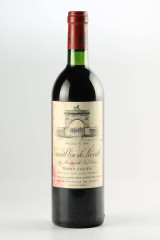
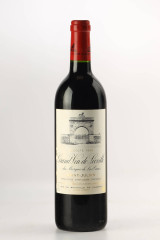
Château Leoville Las Cases forms the heart of the former Léoville estate, divided between 1826 and 1840, of which it retains three-fifths. A Deuxième Cru Classé of Saint-Julien, it owes the essence of its reputation to its walled Grand Clos, bordering Château Latour at the edge of Pauillac. On its deep gravel soils, a dominant share of Cabernet Sauvignon complemented by Merlot and Cabernet Franc yields a wine that is upright, firm and refined, with the structure of a premier cru.
The estate ranks among the benchmarks of its appellation, carried by a consistency recognised at the very highest level. The 1982 vintage stands among its classic peaks, alongside 1990 and 1996; the 2000 vintage extends this lineage of great ageing years, while the 2010 wine illustrates the estate's style in the recent period.
Read moreFiltrer
Products (16)
Sign up and be the first to know about new arrivals.
Château Léoville Las Cases has its origins in one of the most extensive wine estates in the Médoc in the 18th century. Following the French Revolution and successive inheritances, the Léoville estate was divided, giving rise notably to Léoville Barton, Léoville Poyferré and Léoville Las Cases. The latter retains the historic heart of the vineyard, embodied by a walled enclosure, a symbol of continuity and independence.
Classified as a Deuxième Grand Cru Classé in 1855, Château Léoville Las Cases early on acquired a reputation for rigour and consistency. Still owned by the Delon family, the estate has preserved its identity whilst progressively modernising its practices, without ever yielding to a demonstrative or excessive approach.
The vineyard stretches across the northern tip of Saint-Julien, at the precise boundary with Pauillac. Its heart bears a name: the Grand Clos, a plot enclosed by a long stone wall that protects it and sets it apart from the rest of the appellation. This clos directly adjoins Château Latour: only a narrow stream separates the two vineyards, which gives a measure of the exceptional nature of the site. The vines rest on deep gravel — pebbles and stones accumulated over millennia — set on subsoils that blend sand and clay.
These poor, perfectly drained soils force the vine to send its roots deep into the ground, a guarantee of concentration. The proximity of the Gironde estuary tempers the climate, protects against spring frosts and encourages the regular ripening of the grapes. It is this rare combination — a great gravel terroir bordering Pauillac — that draws the wine closer to its neighbouring premiers crus.
The grape variety composition is largely dominated by Cabernet Sauvignon, complemented by Merlot and Cabernet Franc. Yields are deliberately controlled and plot selection is particularly strict. The vinifications favour a measured extraction, aimed at preserving the purity of the fruit and the expression of the terroir.
Barrel ageing accompanies the wine without marking it excessively. The style of Château Léoville Las Cases is characterised by a dense tannic structure, great aromatic precision and a remarkable freshness, the estate's signature across the vintages.
The second wine, Clos du Marquis, comes from distinct plots and benefits from a dedicated vinification, offering a complementary reading of the vineyard.
Few wines from Saint-Julien demand as much patience. In the great years, Leoville Las Cases often requires fifteen to twenty years of cellaring before revealing the best of itself, and the finest bottles cross several decades without difficulty, reaching their peak between twenty and fifty years after the harvest. This ageing potential makes it one of the most sought-after wines among enthusiasts and collectors alike.
International critical recognition has accompanied the estate for generations: through its consistency at the very highest level, it is constantly ranked among the very finest properties in the appellation, to the point that its wine is frequently compared to that of the premiers crus. This status as a benchmark, earned vintage after vintage, owes less to an isolated moment of brilliance than to a consistency that few estates manage to equal.
Saint-Julien is one of the most homogeneous appellations in the Médoc: without a premier cru classé, yet rich in a constellation of estates of the very highest level. The original Léoville estate itself gave rise to two other neighbouring properties, Léoville Poyferré and Léoville Barton, born from the same division and long drawn from the same lands. Each has forged its own style — more fleshy and flattering for one, more classic and refined for the other — yet all three carry the legacy of the great Léoville. Around them shine other reference estates of the appellation, such as Ducru-Beaucaillou and Gruaud Larose, which contribute to Saint-Julien's renown. In this concert, Leoville Las Cases occupies a place apart: through its walled Grand Clos bordering Pauillac and its openly stated ambition to rival the premiers crus, it raises the appellation to a higher level.


