 /
/ 





















Receive our latest arrivals of Saint Julien Appellation by email!
Sign up and be the first to know about new arrivals.

Would you like to create your own composition? Contact us!
 Contact us


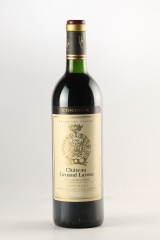
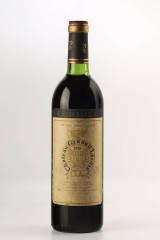
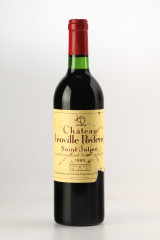
Established on the left bank of the Gironde, between Pauillac and Margaux, Saint-Julien is the most compact of the four great communal appellations of the Médoc and a cornerstone of the great wines of Bordeaux. Its deep Garonne gravel ridges carry a dominant cabernet sauvignon, supported by merlot, cabernet franc and petit verdot; eleven growths listed in the 1855 classification craft reds of rare consistency. With no first growth but rich in second growths, the appellation bridges the power of Pauillac and the finesse of Margaux. Château Léoville Poyferré 2004 reveals its velvety structure while Château Gruaud Larose 2021 expresses its depth, and the vintages 2009 and 2010 confirm its ageing potential.
Read moreFiltrer
Products (105)
Sign up and be the first to know about new arrivals.
The Saint-Julien appellation is a prestigious AOC of the Médoc, located between Pauillac and Margaux on the left bank of Bordeaux. Renowned for its elegant and well-balanced red wines, it embodies a perfect synthesis between power and finesse.
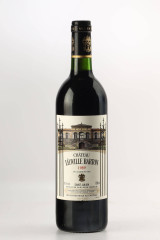
Saint-Julien has a high proportion of classified growths, including iconic estates such as Château Léoville Las Cases, Château Ducru-Beaucaillou, Château Léoville Barton, Château Gruaud Larose and Château Talbot.
The terroir of Saint-Julien is composed of deep Garonne gravels resting on well-drained soils. The proximity of the Gironde estuary promotes a temperate climate, ideal for the ripening of cabernet sauvignon.
The Saint-Julien vineyard has its roots in the great viticultural expansion of the Médoc during the 17th and 18th centuries, when vast estates drained the land close to the estuary and planted vines on the finest gravel ridges. By the 19th century, its châteaux ranked among the most sought-after properties on the left bank, a standing enshrined by the imperial classification of 1855. The Saint-Julien appellation d'origine contrôlée was officially recognised in 1936, among the first communal delimitations of the Médoc. Its heart beats around the village of Saint-Julien-Beychevelle, which gave its name to the commune and brings together most of the grands crus, with a few parcels extending towards neighbouring communes. This continuity of ownership, know-how and commitment to quality largely explains the remarkable consistency of the appellation.
The terroir of Saint-Julien rests on thick gravel terraces deposited by the Garonne: a mixture of pebbles, gravel and sand, sometimes several metres deep, laid over subsoils of clay and limestone. This gravel drains water very quickly and warms the vines, forcing the roots to reach deep for moisture — up to five metres — a beneficial constraint that regulates the nourishment of the grapes and smooths out climatic extremes. The vineyard unfolds across gentle undulations, those ridges that rise above the drainage ditches running towards the Gironde. The nearby estuary acts as a thermal buffer, moderating spring frosts as well as summer heatwaves, offering cabernet sauvignon ideal ripening conditions. To explore this terroir and its nuances in greater depth, our dedicated article on the Saint-Julien appellation describes its main sectors in detail.
Saint-Julien produces only red wine, from a blend in which cabernet sauvignon reigns. This grape variety provides the tannic backbone and the capacity for ageing; merlot adds roundness and fruit, cabernet franc refines the bouquet, and petit verdot reinforces the colour and structure in the greatest vintages. From this balance emerges a style that is instantly recognisable: precise wines with a firm yet silky tannic framework, underpinned by fine freshness. In their youth, they display blackcurrant, blackberry and violet; as they age, they evolve towards cedar, blond tobacco, cigar box and delicate notes of woodland undergrowth. Saint-Julien is often described as the happy medium of the Médoc: less massive than Pauillac, more restrained than Margaux, it combines power and refinement. At the table, these reds are well suited to grilled red meat in their youth, and, at maturity, to feathered game or a well-aged cheese.


