 /
/ 















Receive our latest arrivals of Château Pape Clement by email!
Sign up and be the first to know about new arrivals.

Would you like to create your own composition? Contact us!
 Contact us
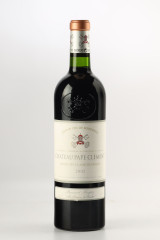
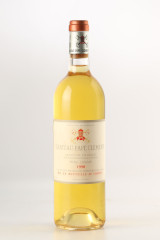
Château Pape Clément, Grand Cru Classé of Pessac-Léognan, is one of the oldest wine estates in Bordeaux. Its gravel vineyard, located on the outskirts of the city, gives rise to red and white wines of great depth, combining controlled power, aromatic complexity and elegance. A historical and qualitative reference of the appellation, Château Pape Clément captivates with wines built for ageing and sought after by lovers of great Bordeaux wines.
Emblematic vintages such as Pape Clément 2005, Pape Clément 2001, Pape Clément 1998, Pape Clément 2000, Pape Clément blanc 2012, Pape Clément 2010 or Pape Clément 2003 illustrate the quality consistency and singular position of Château Pape Clément.
Filtrer
Products (7)
Sign up and be the first to know about new arrivals.
The history of Château Pape Clément dates back to 1305, when Bertrand de Goth, Archbishop of Bordeaux, became Pope Clement V. Passionate about viticulture, he developed his vineyard before passing it on to the Church, giving birth to one of the oldest wine estates in Bordeaux. For several centuries, the wine produced on this land was known as "the Pope's vines", conferring an exceptional historical aura to the estate.
Over time, Château Pape Clément has lived through the great periods of Bordeaux history, adapting to technical developments and modern quality requirements. Its classification as a Grand Cru Classé de Graves in 1953 officially consecrates its rank among the great references of Pessac-Léognan, both for its red wines and white wines.
The vineyard of Château Pape Clément extends over approximately 60 hectares, planted on gravelly hillcrests characteristic of southern Bordeaux. The soils, composed of Pyrenean gravel, sand and clay, provide effective natural drainage whilst allowing regular water supply to the vines.
The temperate climate, influenced by the proximity of the Garonne and the Atlantic Ocean, promotes slow and complete ripening. This combination of soils and climate allows the grape varieties to develop a precise aromatic expression and a balanced structure, the signature of great Pessac-Léognan wines.
The vineyard management is based on a meticulous approach, with controlled yields and precise plot-by-plot work. Each grape variety is vinified separately in order to preserve its identity and own expression. The harvests are carried out at optimal maturity, favouring balance rather than over-concentration.
The vinifications seek finesse and depth, with gentle extractions and carefully measured ageing in French oak barrels. The style of Château Pape Clément wines is characterised by a velvety texture, great aromatic complexity and a structure capable of supporting long ageing. The whites, meanwhile, are distinguished by their amplitude, tension and remarkable persistence.
The wines of Château Pape Clément have a high ageing potential, which can exceed twenty to thirty years in great vintages. Over time, they develop complex aromas of ripe fruits, graphite, cedar, spices and, for the whites, honeyed and mineral notes.
International critics regularly highlight the precision and consistency of the estate, positioning Château Pape Clément among the most sought-after wines of Pessac-Léognan and the collectible wine market.
Within Pessac-Léognan, Château Pape Clément occupies a leading position alongside other emblematic estates such as Château Haut-Brion, Château La Mission Haut-Brion, Château Smith Haut Lafitte, Château Haut-Bailly or Domaine de Chevalier. Through its age, the consistent quality of its wines and its dual expertise in red and white, Château Pape Clément fully contributes to the prestige and international recognition of the appellation.


