 /
/ 















There are no products here at the moment.
You can use the search bar or the menu to find others, or send us a message.
Back to homepage Write to us
Would you like to create your own composition? Contact us!
 Contact us

The 1928 vintage ranks among the greatest years of the interwar period in Bordeaux. A mild winter, a warm dry spring, then a burning summer concentrated the grapes and thickened their skins: the wines were born powerful, dense and tannic, almost austere in their youth, yet endowed with an extraordinary capacity for ageing. Where the 1929 seduced with its immediate opulence, the 1928 demanded decades to open up, and can be enjoyed today, nearly a century on, with a preserved freshness. On the Right Bank, Vieux Château Certan 1928 expresses the full density of the vintage in Pomerol; in Sauternes, Château d'Yquem 1928 delivers its sweet wine interpretation, carried by a perfect botrytis. To place 1928 among the great years of its century, consult our Vintage Guide.
Read moreYou can use the search bar or the menu to find others, or send us a message.
Back to homepage Write to usSign up and be the first to know about new arrivals.
A few GREAT WINES FROM 1928 ...
Some bottles from 1928 can still be enjoyed today if they have been stored in good conditions. Wines from great estates with a strong initial structure have sometimes weathered the decades with remarkable stability.
Full-bodied red wines, particularly those made from cabernet sauvignon or pinot noir, have often demonstrated good ageing ability. Sweet wines rich in sugar and acidity also rank among the most long-lived wines.
The 1928 vintage ranks among the peaks of the interwar period, and above all counts among the most long-lived of the 20th century. After a mild winter and a warm spring favouring an early bud break, a burning, dry summer reduced yields, concentrated the juice and thickened the skins — particularly those of the cabernet sauvignon. The harvest, begun at the end of September, brought in healthy, very ripe grapes. The result was powerful, richly structured wines whose massive tannins initially confounded: it took several decades for them to integrate. That same framework accounts for their exceptional longevity; where the charming 1929 offered immediate pleasure, 1928 rewarded patience, and the finest bottles can still be enjoyed with a freshness that few vintages of such great age can claim.
In Bordeaux, the hot, dry summer of 1928 yielded grapes of remarkable concentration, giving rise to wines built around a dense tannic framework and sustained acidity. Yields, reduced by drought, accentuated this compact richness. In their youth, these reds were closed, almost severe; but the balance between power and freshness allowed them to cross the decades without faltering. The Médoc, led by its first growths, produced upright and profound wines, their aromas now tertiary — leather, tobacco and undergrowth — while the Right Bank contributes a more velvety flesh on the great terroirs of Pomerol.
On the Left Bank, Château Latour 1928 is regarded as the reference wine of the year, with a density and length that left their mark on the history of the estate. It shares the summit with Margaux and Haut-Brion, while on the Right Bank Petrus 1928 counts, alongside Cheval Blanc, among the most sought-after bottles of the vintage. In Saint-Julien, Château Gruaud Larose 1928, still present in our cellar, illustrates the success of the Médoc's second growths in this great year of structure.
In Sauternes and Barsac, 1928 ranks among the truly great sweet wine vintages. The summer heat followed by favourable late-season conditions allowed ideal development of noble rot, concentrating the musts without excessive heaviness. The wines combine generous sweetness with an acidity that ensures remarkable longevity; nearly a century on, the finest bottles retain a rare freshness and aromatic precision.
Château d'Yquem 1928 dominates the vintage — it is one of the greatest sweet wines ever produced on this terroir —, alongside a Suduiraut at the very top of its game. In our cellar, Château Coutet 1928 from Barsac and Château Guiraud 1928 extend this success, on registers of honey, candied apricot, saffron and orange peel.
Burgundy experienced a contrasted year: a spring frost in Chablis and severe hail in the Côte de Nuits reduced harvests, but the best-exposed terroirs — notably in the Côte de Beaune — yielded wines of fine bearing. The 1928 reds stand out for a body lighter than their Bordeaux counterparts of the year, fine and already integrated tannins, and a delicate aromatic profile of dried cherry and herbs. More structured than the 1929s that followed, they offer the precision and digestibility characteristic of great pinots from cooler years.
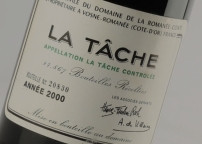
Domaine de la Romanée-Conti is among the major signatures of the vintage in the Côte de Nuits, while the great Chambertins — foremost among them those of Domaine Armand Rousseau — count among the most accomplished reds of the year. These bottles, now exceedingly rare, demand an impeccable provenance.
In the Rhône Valley, 1928 ranks among the most solid vintages of the first half of the century. The hot, dry climate, conducive to slow and complete ripening, yielded dense, structured Syrahs in the north, fully equal to the region's ageing potential. The Hermitage and Côte-Rôtie wines of that year combine power, firm tannins and deep aromas of dark fruit, leather and spice; in the south, ripe grenaches produced warm, generous wines.
On the granite slopes of Tain, the Hermitage of Domaine Jean-Louis Chave perpetuates a family tradition that long predates the vintage, while the house of Paul Jaboulet Aîné and its Hermitage La Chapelle embody the great northern tradition of Syrah. The rare surviving bottles are today collector's pieces.
In Champagne, 1928 is frequently described as the vintage of the century. After a spring frost and an uneven flowering, a superb summer and an ideal end of season yielded wines of exceptional richness and balance, endowed with an ageing potential that few vintages have matched. The cuvées of that year developed, over time, a vinous complexity of dried fruits, honey, brioche and toasted bread.
The Krug 1928 cuvée has entered legend: presented by Decanter as one of the greatest Champagnes ever produced, it reached record heights in the auction room. It ranks, alongside Pol Roger and Bollinger, among the most coveted Champagne bottles of the era.
Choosing a 1928 wine means acquiring one of the greatest structured vintages of the 20th century — a year of tannic power and rare longevity, the very opposite of the immediate charm of 1929. Our cellar today brings together eight bottles from 1928: the mythical Château d'Yquem and two other first-rate Sauternes in Château Coutet and Château Guiraud, a benchmark Pomerol in Vieux Château Certan, a great Saint-Julien signed by Gruaud Larose, not forgetting two armagnacs from the same year, eaux-de-vie that travel through time with superb grace. Every bottle is expertly assessed and inspected — level, label, provenance — then dispatched the same day before 2 pm in secure packaging, with high-definition photographs provided. Consult the SoDivin Vintage Guide to place 1928 among the great years of its century.


