 /
/ 













There are no products here at the moment.
You can use the search bar or the menu to find others, or send us a message.
Back to homepage Write to us
Would you like to create your own composition? Contact us!
 Contact us

The 1961 vintage is one of the great benchmarks of French wine, above all for its reds. Cold weather in late May disrupted flowering — first frost, then poor fruit set — reducing the harvest to a fraction of its usual size. The few surviving bunches, with their thick-skinned grapes, ripened through a warm summer and a fine September. They produced reds of rare concentration, slow to open up but built to last for decades and now at their peak. Bordeaux’s Left Bank and the Pomerol plateau lead the vintage: Château Latour produced one of its benchmark bottles, while Petrus took Pomerol to its highest level. The more accessible sweet wines of the Garonne complete the vintage with a ready-to-drink option. To put 1961 in context among the great years, see our Vintage Guide.
Read moreYou can use the search bar or the menu to find others, or send us a message.
Back to homepage Write to usSign up and be the first to know about new arrivals.
A few GREAT WINES from 1961...
The 1961 vintage belongs to the tiny group of years that redraw the hierarchy of great wines. Cold weather in late May caused frost and poor fruit set, reducing the harvest to a fraction of its usual size; the surviving grapes, concentrated and perfectly ripe, produced reds of rare density. The year’s glory lies chiefly in its reds and extends beyond Bordeaux: the Northern Rhône Valley produced one of its greatest vintages, while Champagne also had a good year. The sweet wines were less remarkable, but offer an accessible option that is already ready to drink. Here is how quality varied by region, to help you buy with confidence.
In Bordeaux, 1961 is a benchmark year for reds. Yields fell to just a handful of hectolitres per hectare at the greatest estates, producing a small crop of thick-skinned berries that concentrated colour, structure and tannin. The wines are rich and deeply structured, austere in their youth and exceptionally long-lived. Success was not uniform, however: the Left Bank — Médoc and Graves — and the Pomerol plateau produced the finest wines, while Saint-Émilion was more uneven. Today, the best bottles offer a benchmark for understanding great Bordeaux at maturity.
In the Médoc, Château Lafite Rothschild produced a wine of great distinction, while Château Palmer in Margaux made what many consider its finest wine ever, and Château Margaux a bottle of rare persistence. In Graves, Château La Mission Haut-Brion produced one of the estate’s finest bottles of the century. On the Pomerol plateau, the vintage’s concentration brought Petrus, Lafleur, Trotanoy and Château Latour à Pomerol to an exceptional level. These bottles are for collectors who pay as much attention to each bottle’s condition as to the estate’s reputation.
Ageing potential: the best reds are at their peak and holding there; collectible wines to buy only once the fill level and provenance have been checked, and to decant before serving.
For sweet wines, 1961 falls a notch below its standard for reds: the year did not give Sauternes the conditions needed for its greatest vintages. Botrytis — the “noble rot” that dehydrates grapes, concentrates their juice and refines their aromas — developed less evenly. The result is sweet wines that are balanced and mellow rather than overwhelmingly powerful, and now fully ready to drink. That is precisely what makes them an appealing introduction to the vintage: golden wines with notes of honey, apricot and candied citrus, far more approachable than the year’s great reds.
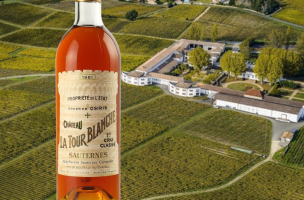
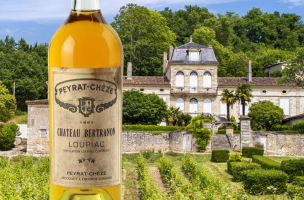
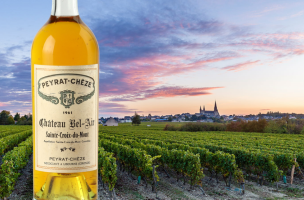
This selection centres on Sauternes and the right bank of the Garonne. In Sauternes, Château La Tour Blanche, a classified first growth, exemplifies the age-worthy, botrytised style. Across the river, on the slopes bordering it, the Loupiac and Sainte-Croix-du-Mont appellations produce lighter sweet wines shaped by Sémillon and the autumn mists formed where the Ciron meets the Garonne. Direct neighbours of Barsac, they offer a reliable, affordable way to discover an aged sweet wine. Château d'Yquem, the pinnacle of the appellation, remains the benchmark for judging what Sauternes can achieve.
Ageing potential: the sweet wines are already fully developed and ready to drink; a reliable introduction to aged wines, best served well chilled without delay.
Burgundy also had a small but high-quality harvest in 1961. Difficult flowering reduced yields, but a warm late season allowed the Pinot Noir grapes to reach full, even ripeness. The Côte de Nuits reds are concentrated, generous and built to age, with aromas of dark fruit, woodland floor and spice. The more uneven whites call for careful selection. The year produced some great Pinot Noirs, somewhat overshadowed by the sun-drenched 1959 but with genuine depth.
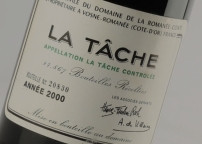
For a truly great 1961 Pinot Noir, Domaine de la Romanée-Conti remains the name to seek out: its Vosne-Romanée grands crus are among the year’s most sought-after wines. A bottle of this vintage at this level deserves a collector’s full attention, provided its provenance and fill level are checked meticulously.
Ageing potential: the best red grands crus remain vibrant and ready to drink; collectible bottles for which provenance matters above all else.
The Rhône Valley produced one of its greatest vintages in 1961. As in Bordeaux, extensive poor fruit set reduced the harvest to exceptionally low yields. On the granite soils of the north, Syrah produced wines of remarkable density and length, with aromas of dark fruit, olive and spice. These are reds built for very long ageing; more than sixty years after the harvest, the best continue to impress with their balance.
The 1961 Hermitage La Chapelle from Paul Jaboulet Aîné is regularly cited among the greatest red wines ever made, the Rhône’s crowning achievement of the year. Alongside it, Hermitage from Domaine Jean-Louis Chave and Guigal’s Northern Rhône cuvées are among the names whose 1961 bottles still merit close attention. These wines combine power and freshness with rare consistency.
Ageing potential: the best bottles still have considerable life ahead; for lovers of long-maturing Syrah, after generous decanting.
Champagne enjoyed a good growing season in 1961, with even flowering and healthy grapes harvested in excellent conditions. The vintage cuvées are ripe and balanced, now fully mature, with aromas of dried fruit, coffee, toast and peach. This is now a vintage for lovers of aged Champagne, whose richness and length can still surprise.
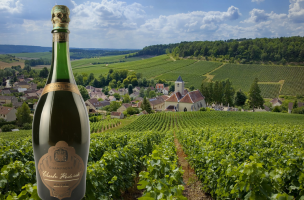
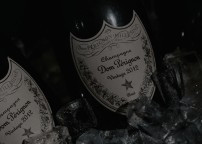
Among the year’s most sought-after cuvées, Dom Pérignon 1961 remains a benchmark for many tasters, alongside the great houses of the Montagne de Reims. Charles Heidsieck’s vintage cuvée follows the same vein, with a mature, vinous profile. Above all, these are collector’s bottles, to be chosen only with an impeccable history.
Ageing potential: fully mature, collectible Champagnes; open only a perfectly preserved bottle, and do not leave it lying down for too long after purchase.
Choosing a 1961 wine means experiencing one of the greatest years in French wine: a fine Bordeaux or Rhône red for a lover of age-worthy wines, a mature Champagne for a collector, or a more affordable, ready-to-drink sweet wine from the Garonne as an introduction to aged wines. Every bottle in our selection is expertly assessed and checked — fill level, label, authenticity and provenance — then stored under controlled temperature and humidity. To compare vintages and refine your choice, see the SoDivin Vintage Guide.