 /















Receive our latest arrivals of 1944 Wine by email!
Sign up and be the first to know about new arrivals.

Would you like to create your own composition? Contact us!
 Contact us
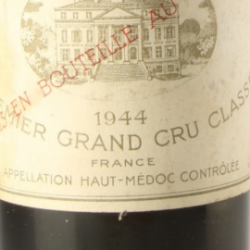
Harvested as Bordeaux regained its freedom, with the last occupying troops leaving the city in late August 1944, just before the harvest, the 1944 vintage remains a modest year, marked by late-season rain. The reds were light, supple and sometimes spicy, without the stature of great years. The true success was Sauternes: generous, rich and vibrant sweet wines shaped by high-quality botrytis, or ‘noble rot’. In Port, no Vintage Port was declared: the year lives on through its colheitas, single-vintage tawnies aged for many years in cask. Among the finest, Château d'Yquem leads the way in Sauternes, while Château Latour produced one of the year’s few great reds. To see where 1944 stands among the vintages of its century, consult our Vintage Guide.
Filtrer
Products (5)
Sign up and be the first to know about new arrivals.
It is a modest year, and recognising it for what it is helps you buy wisely. Harvested at the time of the Liberation, after a reasonable summer followed by rain late in the season, 1944 produced light, supple Bordeaux reds with a certain finesse, but without the depth of great years. The year’s real successes are in Sauternes, where the sweet wines are full and rich, and in Port, where the colheitas offer reliable pleasure. The finest terroirs, such as Château Haut-Brion, nevertheless produced reds that have stood the test of time. This is therefore a vintage for the curious and for collectors, to be chosen bottle by bottle rather than with your eyes closed.
Yes, provided you choose the style and the bottle carefully. Sauternes and colheita Ports are the safest bets: the way they are made helps them withstand the passage of time, and they can be enjoyed today with confidence. Bordeaux reds call for more caution, as the wines from that year were generally rather light; only wines from the finest terroirs, among the Bordeaux classified growths, in bottles with impeccable fill levels and provenance, remain fully enjoyable. As with any very old vintage, variation from bottle to bottle is normal: the fill level matters more than the name.
Yes, and its history is a large part of what makes it so moving: giving a bottle from the year of the Liberation means giving a piece of the 20th century. For a birth year or wedding anniversary, two choices are particularly safe: a Sauternes, as the 1944 sweet wines have retained their structure, or a colheita Port, naturally ready to drink after its long ageing in cask. The great Bordeaux reds are also an option if you choose a top terroir and a perfectly preserved bottle. We always prioritise impeccable fill levels so that the tasting lives up to the occasion.
The 1944 vintage is defined by a date before a score: the Liberation, with the harvest taking place as France regained its freedom. In quality terms, the year remained modest. A reasonable summer followed by rain as harvest approached produced uneven, often light wines. The appeal of 1944 lies not in its power but in its genuine successes — the sweet wines of Sauternes and colheita Ports — and in the history carried by every bottle. It is a vintage to buy with a clear understanding of its character, focusing on the most reliable styles and producers.
In Bordeaux, the year went well until the final days, when conditions deteriorated: fine weather sustained the vines, then rain arrived during an abundant but uneven harvest. The resulting reds were light, supple and rather short, with the best retaining a savoury, spicy character. These wines had modest ageing potential, elegance prevailing over density, and many bottles have now reached or passed their drinking window. Only the greatest terroirs had the substance to survive the decades convincingly, which explains why the best 1944 wines remain sought after.
On the Left Bank, Pauillac, despite suffering bombardment in the summer of 1944, still produced some fine wines: Château Mouton Rothschild is the year’s most sought-after name there, alongside an exceptionally fine Château Margaux. In Graves, Château La Mission Haut-Brion confirms the consistency of its terroir in a demanding year, while in Saint-Julien, Château Gruaud Larose is among the vintage’s most enjoyable reds.
Ageing potential: limited to premiers crus and the best terroirs; check the fill level and provenance, and decant these now-fragile wines with care.
Sauternes was the pleasant surprise of 1944. While the reds struggled, the sweet wines benefited from botrytis — the ‘noble rot’ that concentrates the grapes — and surpassed the year’s average quality, though results varied between estates. These are generous, rich and vibrant sweet wines, round and approachable, with charm rather than the power of the greatest vintages. Alongside Port, they are the most rewarding introduction to the vintage.
Château Gilette perfectly illustrates the year: true to its approach, the estate aged its 1944 for many years in tank before bottling, giving it surprising freshness today. Château Guiraud offers a particularly unctuous, rich and vibrant version, while Climens and Yquem remain the vintage’s benchmarks for those seeking the very best. Explore the whole appellation from the Sauternes page.
Ageing potential: one of the safest styles of 1944; the best bottles can be enjoyed now without hesitation, preferably well chilled.
1944 was not a Vintage Port year: the major houses, focused on what would become the legendary 1945, did not declare the vintage. Yet the year lives on through its colheitas. A colheita is a single-vintage Port aged for many years in cask before bottling, giving it an amber colour, aromas of dried fruit and caramel, and great suppleness. By its nature, it is already ready to drink, without the uncertainty of a very old red wine.
This makes Port the most accessible and reliable way into the 1944 vintage. Real Companhia Velha, under its Royal Oporto label, offers a fine colheita alongside wines from Souza Guedes and Sullivan, all from the 1944 harvest. Explore these bottles from the Port page; they suit both drinking now and giving as a birth-year gift without the uncertainty of an old red wine.
Ageing potential: ready to drink by design; a colheita keeps for several weeks after opening and simply calls for reliable provenance.
Burgundy, also liberated in autumn 1944, endured a difficult year. Delayed vine growth and persistent rain led to a diluted, watery harvest and a distinctly weak vintage. The reds lack substance and concentration, and few bottles are worth seeking out today for the wine alone.
In a year like this, only the greatest producers stood apart, thanks to rigorous selection and winemaking. Domaine de la Romanée-Conti is among the few to have produced wines that are still cited, even in this difficult vintage. Otherwise, Burgundy 1944 is chiefly for lovers of curiosities and history.
Ageing potential: reserve for exceptional producers and impeccable bottles; open for the experience of an old wine rather than for power.
In the Rhône Valley, 1944 never really made its mark. It was an unassuming year, without the brilliance of the great Rhône vintages on either side of it. The granite-soiled north, Syrah’s home, lacked the consistency on which its reputation rests, and surviving bottles are rare curiosities.
The year’s best results are found in the south, where a few estates made good use of Grenache to produce respectable wines. Paul Jaboulet Aîné embodies the northern Rhône’s tradition of wines made to age; its very old bottles appeal to lovers of mature leather and spice notes.
Ageing potential: limited to bottles with an impeccable history; prolonged decanting is recommended for the few northern reds still holding up.
Choosing a 1944 wine is first and foremost choosing a date: the year of the Liberation, captured in every bottle. It is a modest vintage, worth buying for its genuine successes rather than a greatness it cannot claim. The rich, vibrant sweet wines of Sauternes and the naturally ready-to-drink colheita Ports are at its heart, complemented by the best Left Bank reds for those seeking a great terroir. Every bottle is assessed and checked — fill level, label and provenance — before being carefully and securely packaged. To compare vintages and refine your choice, consult the SoDivin Vintage Guide.