 /

















Receive our latest arrivals of 1935 Wine by email!
Sign up and be the first to know about new arrivals.

Would you like to create your own composition? Contact us!
 Contact us
The 1935 vintage stands in the shadow of the great 1934, sharing its style in a lighter form. A cold spring followed by rain at harvest gave Bordeaux fine but lightly structured reds, to be enjoyed for the pleasure of an old wine rather than for their ageing potential. The year’s real success was in Burgundy: its whites reached a remarkable standard, ripe and precise, among the decade’s finest, closely followed by accomplished reds from the best sites in the Côte de Nuits. Domaine des Comtes Lafon 1935 shows what the whites can offer, while Château Pichon Comtesse de Lalande 1935 illustrates the Médoc at its best that year. To see how 1935 compares with other years of its era, consult our Vintage Guide.
Filtrer
Products (2)
Sign up and be the first to know about new arrivals.
1935 was a respectable year, long overshadowed by the great 1934 vintage before it and by the war that broke out around bottling time. Its successes were concentrated in Burgundy, where the whites are considered excellent — ripe, precise and exceptionally fine — while reds from the best terroirs also held their own. In Bordeaux, the reds were lighter and lacked structure: pleasant, but with little ageing potential. To appreciate the best whites the year produced, an estate such as Domaine Leflaive remains a benchmark.
Someone born in 1935 turns 91 in 2026: it is not a milestone birthday, but 1935 is an ideal birth year to commemorate with a bottle made in that same year. At this age, the most reliable choices are styles that stand the test of time: a great white Burgundy with an impeccable fill level, a sweet Sauternes or, above all, an old Armagnac, a spirit made to endure for decades. These spirits can be enjoyed well beyond ninety years of age and make the safest gift. Always check the fill level and condition of the bottle before buying.
It all depends on the type of wine and how it has been stored. Well-kept great white Burgundies can still surprise with their liveliness and aromas of honey and dried fruit, while sweet wines retain a lovely richness. The reds, more fragile from the outset, are chiefly for collectors: even among the Bordeaux classified growths, only bottles with an impeccable history are worth opening. Before buying, check the fill level, colour and condition of the label: at over ninety years old, every bottle is a case of its own.
The 1935 vintage was a respectable year, born of a cold spring and a rainy harvest, long overshadowed by the great 1934, which it resembles in a lighter style. For today’s enthusiast, its appeal lies not in power but in finesse and rarity: Burgundy, particularly its whites, produced the year’s best wines, while Bordeaux made delicate reds best left to the curious. The year 1935 also laid the foundations for the appellation system: the legislation establishing the AOC system and what is now the INAO dates from that year. Explore this page region by region to distinguish wines still worth opening from those best regarded as collectors’ items.
Burgundy was the great success of 1935. The abundant harvest produced wines similar in style to 1934 but somewhat lighter, with the finest cuvées coming from grapes picked later. The whites reached a remarkable standard: ripe, balanced and precise, they rank among the decade’s successes. The reds followed, good to very good on the best sites, built on finesse and freshness rather than weight. This is the region to prioritise for the vintage.
Among the whites, Bouchard Père & Fils, based on the Côte de Beaune, is among the names whose 1935 wines can still offer a genuinely moving experience when the bottle has been perfectly stored. Among the reds, the great names of the Côte de Nuits lead the way: Domaine Georges Roumier in Chambolle-Musigny and Domaine Armand Rousseau in Gevrey-Chambertin, whose estate-bottled wines from this era are landmarks, produced some of the year’s most interesting bottles. Today, these wines are appreciated for their evolved aromas — woodland floor, dried fruit and gentle spice — as much as for their length.
Ageing potential: the great whites with impeccable fill levels remain the safest choice from 1935; Côte de Nuits reds can still offer fine drinking, provided each bottle is chosen on its provenance.
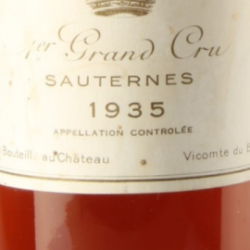
In Bordeaux, 1935 was a modest year. A cold spring reduced the crop, and rain at harvest produced fine but lightly structured reds, offering the pleasure of an old wine rather than ageing potential. The year fared better than the disastrous vintages early in the decade, but came nowhere near the brilliance of 1934. The sweet wines of Sauternes, harvested later, had mixed results: the best bottles, sustained by sugar and acidity, have stood the test of time most successfully.
On the Left Bank, Château Latour and the Médoc’s first growths remain the names whose well-preserved 1935 bottles still merit attention, as does that year’s Pichon Comtesse de Lalande. On the Right Bank, the more abundant harvest yielded a few reds that lived up to expectations, while in Sauternes the great sweet wines retain remarkable richness in intact bottles. The rule for this vintage is simple: provenance makes all the difference, and every surviving bottle must be assessed individually.
Ageing potential: Sauternes sweet wines and a few rare first growths may still be alive if fill levels are high; reserve the reds for knowledgeable collectors, after checking fill levels and any recorking.
The Rhône Valley did not distinguish itself in 1935. The vintage was subdued, lacking the consistency of great sun-drenched years, and wines capable of ageing were the exception. The cooler north produced respectable but seldom dense Syrahs, while the south lacked the brilliance of its best vintages. One name stands out clearly, however: the Hermitage from Domaine Jean-Louis Chave, regarded as a remarkable success for the year and the Rhône bottle to seek out from this vintage. Otherwise, 1935 Rhône wines are curiosities to open without delay.
Ageing potential: apart from a few great Hermitage wines, 1935 Rhône wines should be drunk now, provided the bottles are in impeccable condition.
Champagne’s 1935 harvest produced balanced wines without excessive ripeness, favouring elegance over power. Few houses, however, declared a vintage: most grapes went into non-vintage blends, and the house of Louis Roederer was among the very few to declare a 1935. The surviving vintage cuvées have a highly evolved profile — brioche, dried fruit and honey — sought after by lovers of old Champagne when the bubbles have retained their finesse. Today, they are collectors’ items above all.
Ageing potential: highly evolved collectors’ items, suited only to knowledgeable enthusiasts and bottles with impeccable histories.
This is where 1935 comes into its own for today’s enthusiast. While the year’s still wines are fading, the spirits of South-West France are made to defy time: the alcohol in old Armagnac acts as a natural preservative, allowing a vintage to endure well beyond ninety years. Aged at length in cask, these spirits gain depth and develop their sought-after signature rancio notes — dried fruit, prune and spice.
The old Armagnac from Domaine Sempé, a producer in the Gers known for long ageing, illustrates this longevity: a 1935 spirit of this kind needs no decanting, just a little air in the glass, and withstands the passage of decades far better than the year’s fragile reds. Other age-worthy styles complete the picture for 1935: the Chenin wines and sweet wines of the Loire, sustained by their acidity, and the year’s great Ports, reputed to be among the decade’s finest, are also among the most reliable choices for drinking.
Ageing potential: 1935 Armagnac remains thoroughly drinkable and is the safest birth-year gift; the year’s Loire Chenin wines and Ports can be enjoyed from well-preserved bottles.
Choosing a 1935 wine means accepting the rule of old vintages: quality depends less on the year’s reputation than on the vineyard of origin and storage conditions. For this vintage, the discerning buyer should look first to Burgundy’s great whites, then to Côte de Nuits reds and age-worthy spirits, leaving Bordeaux reds to collectors. These bottles become available only as we acquire cellars: set up an alert on this page to hear about each new arrival, and see how 1935 compares with other years of its century in the SoDivin Vintage Guide. Every bottle offered is professionally assessed and checked — fill level, label and provenance — then dispatched the same day for orders placed before 2 pm, in protective packaging, with high-definition photographs provided.