 /
















There are no products here at the moment.
You can use the search bar or the menu to find others, or send us a message.
Back to homepage Write to us
Would you like to create your own composition? Contact us!
 Contact us
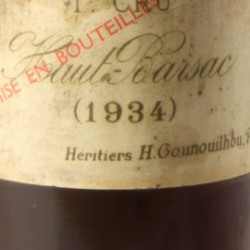
The 1934 vintage is the great exception in a difficult decade. After several mediocre years, a hot, dry summer rescued by well-timed September rain produced an abundant harvest of fine quality. In Bordeaux, the reds are concentrated, tannic and built to last — the only great red-wine vintage of the 1930s — while Sauternes produced its best sweet-wine vintage since 1929. Success extended beyond Bordeaux: remarkable white Burgundies, an exceptional southern Rhône and fine Champagne. Château Latour 1934 embodies the power of the Médoc, while Château d’Yquem 1934 leads the year’s sweet wines. Classic wines still alive in the best bottles: consult our Vintage Guide to see how 1934 compares with other years of its era.
You can use the search bar or the menu to find others, or send us a message.
Back to homepage Write to usSign up and be the first to know about new arrivals.
Yes — in fact, it was the only truly successful year for reds in the 1930s. A hot, dry summer marked by two months of drought was rescued by well-timed September rains, followed by a plentiful harvest of ripe grapes. Bordeaux’s best terroirs produced concentrated, tannic reds built to age, while Sauternes had its best vintage for sweet wines since 1929. The quality extended beyond the Gironde: remarkable white Burgundies, an exceptional southern Rhône and a good showing of vintage Champagne. Château Haut-Brion 1934 remains one of the clearest examples of this great year.
To celebrate a 1934 birth year, choose a sweet Sauternes: sugar and acidity are wine’s best natural preservatives, and these are the year’s wines most consistently suited to drinking. The great Bordeaux reds, concentrated and structured, are another fine choice, provided the bottles have impeccable provenance. Always check the fill level, colour and condition of the label before buying. A 1934 wine is a meaningful gift for a birthday, wedding anniversary or other significant date.
It all depends on the type of wine and how it has been stored. Well-kept sweet Sauternes can still offer a memorable experience, with aromas of candied fruit, honey and spice. The best reds among the Bordeaux classified growths and the most structured Rhône wines have also stood the test of time, and several remain enjoyable to drink. Before buying a wine more than ninety years old, check its fill level, colour and whether it has been recorked: every bottle must be judged on its condition and history.
The 1934 vintage holds a special place in the interwar years. While the decade brought a succession of weak years and the economic crisis weighed on vineyards, 1934 delivered a harvest that was both abundant and high-quality, thanks to a hot, dry summer balanced by September rain. It was the classic great vintage of the 1930s: concentrated, long-lived Bordeaux reds and Sauternes at its best, but also remarkable white Burgundies, generous wines from the southern Rhône and fine Champagne. For buyers, it offers one of the few reliable routes into the great old wines of this era.
In Bordeaux, 1934 was the decade’s only great year for red wine. Two months of summer drought were rescued by rain arriving just in time in September, followed by one of the most abundant harvests recorded up to that point. The best sites in the Médoc and Graves produced reds with rich fruit, concentration and firm tannins, built for long ageing; the Right Bank also made fine wines. In Sauternes, botrytis — the ‘noble rot’ that concentrates the sugars in grapes — produced the best sweet-wine vintage since 1929.
Among the reds, Château Lafite Rothschild made one of its finest wines of the decade, alongside Château Mouton Rothschild and, on the Right Bank, a rich, velvety Château Cheval Blanc. In Sauternes, Château Guiraud adds to the success of the sweet wines, along with Suduiraut and d’Arche Lafaurie, with Yquem setting the benchmark for the vintage. The best-preserved bottles offer drinking pleasure, while others are prized as collectors’ items by lovers of old Bordeaux.
Ageing potential: the finest Médoc and Graves wines remain alive in well-preserved bottles; check the fill level and provenance before buying.
In Burgundy, the hot summer allowed an early harvest of healthy grapes, and the crop was generous — a rare combination in a region where quantity and quality seldom go hand in hand. The whites were the most successful: rich, fruity and beautifully coloured, they rank among the finest of the interwar years, and several are still a pleasure to drink. The softer-styled reds call for more care: quality was uneven, and only the best sites produced wines capable of long ageing.
The whites of Meursault and Chablis remain the year’s safest choices, as illustrated by the cuvées from Domaine Leflaive. Among the reds, Domaine de la Romanée-Conti — with its 1934 Grands-Échezeaux and Clos des Lambrays — is among the few names whose bottles still merit collectors’ attention. These wines are appreciated as much for their evolving aromas as for their history.
Ageing potential: the great whites may still delight if perfectly stored; the reds are primarily collectors’ items.
In the Rhône Valley, 1934 was a great year, helped by a fine summer. The south in particular benefited from the summer heat, allowing its grapes to ripen fully: the wines are rich, full and generous, among the most successful of their era. In the north, Syrah grown on granite produced structured, dense wines with impressive longevity. The Rhône was one of the regions to fare best during the decade, far from the difficulties then affecting northern France.
In Châteauneuf-du-Pape, Château de Beaucastel — already operating at the time — is among the estates whose very old bottles are most sought after. In the northern Rhône, the Hermitage from Domaine Jean-Louis Chave, grown on the granite slopes of Tain, exemplifies the northern Rhône’s success that year, alongside Côte-Rôtie and the appellation’s leading names. These bottles combine density and freshness, and the best-preserved continue to impress.
Ageing potential: the structure of the southern wines makes them among the year’s most reliable; open only the best bottles.
In Champagne, 1934 was a fine vintage, better than most years of the decade. The grapes reached good ripeness, and the year’s vintage cuvées combine finesse with staying power. Not all houses declared a vintage, however: some preferred to reserve their harvest for blends. The surviving bottles are now collectors’ items, with a highly evolved profile of dried fruit, honey and toast.
Among the houses that declared a 1934 vintage, Pommery is a sought-after name, alongside Pol Roger and Roederer. Krug, Piper-Heidsieck and Veuve Clicquot, by contrast, chose not to declare that year — making the 1934 cuvées that do exist all the rarer. These old Champagnes appeal to knowledgeable enthusiasts for their historical interest as much as for the pleasure of tasting them.
Ageing potential: primarily collectors’ items; only bottles with impeccable histories should be considered for drinking.
The 1934 vintage offers what lovers of old wine seek: a classic great year, Bordeaux reds that are still alive, Sauternes sweet wines at their best, and quality extending to Burgundy, the Rhône and Champagne. A bottle also makes an ideal gift to mark a birth year or significant date. Every bottle offered is professionally assessed and checked — fill level, label and provenance — then dispatched the same day for orders placed before 2 pm, in protective packaging. Consult the SoDivin Vintage Guide to see how 1934 compares with other years of its century.